
- २०८३ असोज ५ सोमबार
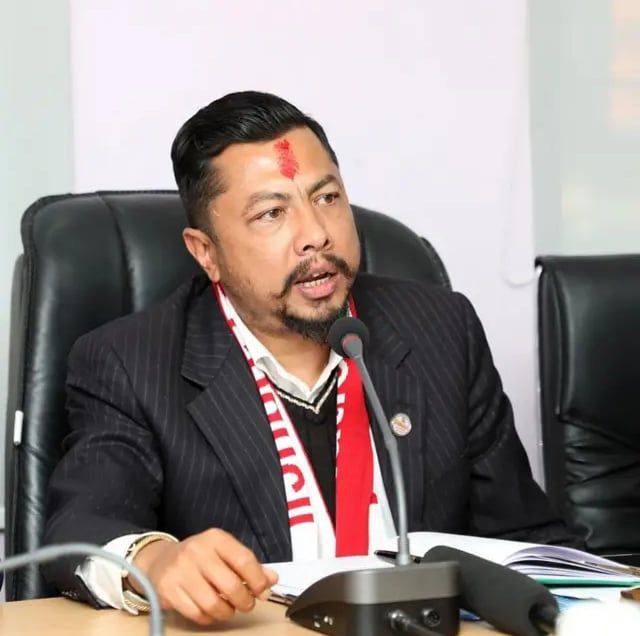
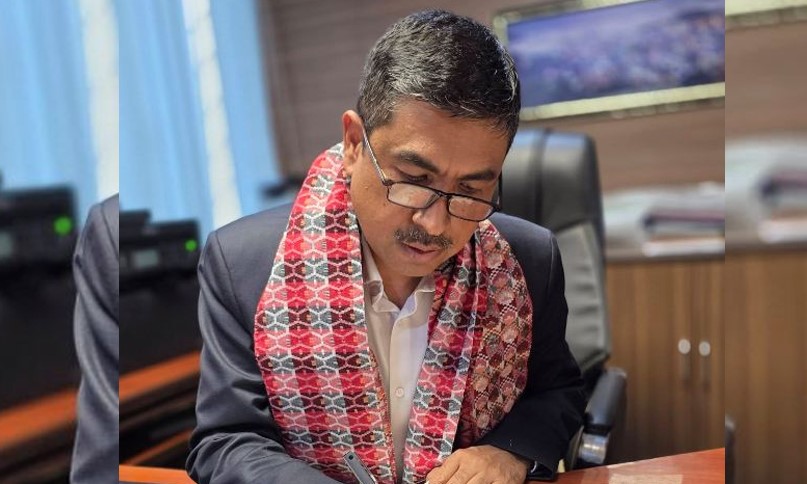
Kathmandu, July 21: Minister for Energy, Water Resources and Irrigation Biraj Bhakta Shrestha has said that effective coordination, shared ownership and result-oriented collaboration between the federal, provincial and local levels are indispensable for sustainable development of energy, water resources and irrigation sectors.
Addressing a thematic committee meeting organized by the Ministry of Energy here on Tuesday, Minister Shrestha said that the goal of a prosperous Nepal envisioned by the Constitution can be achieved only through cooperation among all three levels of government. The meeting was attended by energy ministers and energy secretaries of all seven provinces in the country.
Pointing out the need to use the meeting as an opportunity to prepare a basis for joint action plans, clear responsibilities, timely implementation and regular monitoring, Minister Shrestha said that the government has adopted a policy of conserving rivers not only as a source of water resources but also as a basis for civilization, culture, biodiversity, environmental balance and human existence.
Informing that scientific studies will be conducted on rivers of religious, cultural, environmental and social importance, he stated that the government has the responsibility to ensure a clean and continuously flowing river system for future generations. For this the traditions, culture and spiritual values of the indigenous communities connected to the rivers should be preserved as national heritage.
In this regard, the process of formulating a new water resources policy and legal framework has been taken forward, focusing on the overall conservation, scientific management and sustainable use of rivers.
Stating that the experiences, suggestions and active participation of the provinces and local governments are extremely important, he clarified that the ministry is committed to formulating laws in a way that is owned by all levels.
He also stressed on the need for an integrated plan for expanding irrigation facilities throughout the year in arable land, easy availability of seeds and fertilizers, and marketing of agricultural produce.
Sharing about the bill related to renewable energy and energy efficiency, he said that the law will encourage the use of energy-efficient technology, reduce production costs, promote clean energy, and create a clear legal basis for the development and regulation of renewable energy such as green hydrogen, solar, wind, and biomass.
Minister Shrestha said that climate change is no longer a matter for any one level of government, and that it should be addressed by the federal, provincial and local levels through a common vision and action plan.
During the meeting, discussions were held on the need for legal arrangements to clearly allocate the rights, obligations and responsibilities of all three levels of government in the development and operation of water resource projects.
The issue of making the use, development and conservation of surface and groundwater resources systematic under the Water Resources Bill was also pointed out by the participants who also emphasized the need to create an environment to implement the principle of integrated water resource development in practice.
The meeting is expected to prepare the basis for making coordination between the federal, provincial and local levels more effective for the expansion of renewable energy along with the sustainable use, conservation and development of water resources.





© 2026 All right reserved to arthanepal.com | Site By : Sobij