
- २०८३ असोज २० मंगलबार
Kathmandu, Sept 27: Prime Minister Balendra Shah went to the 81st session of the United Nations General Assembly with a simple argument: those who did the least to drive global warming should not be left to bear some of its harshest consequences.
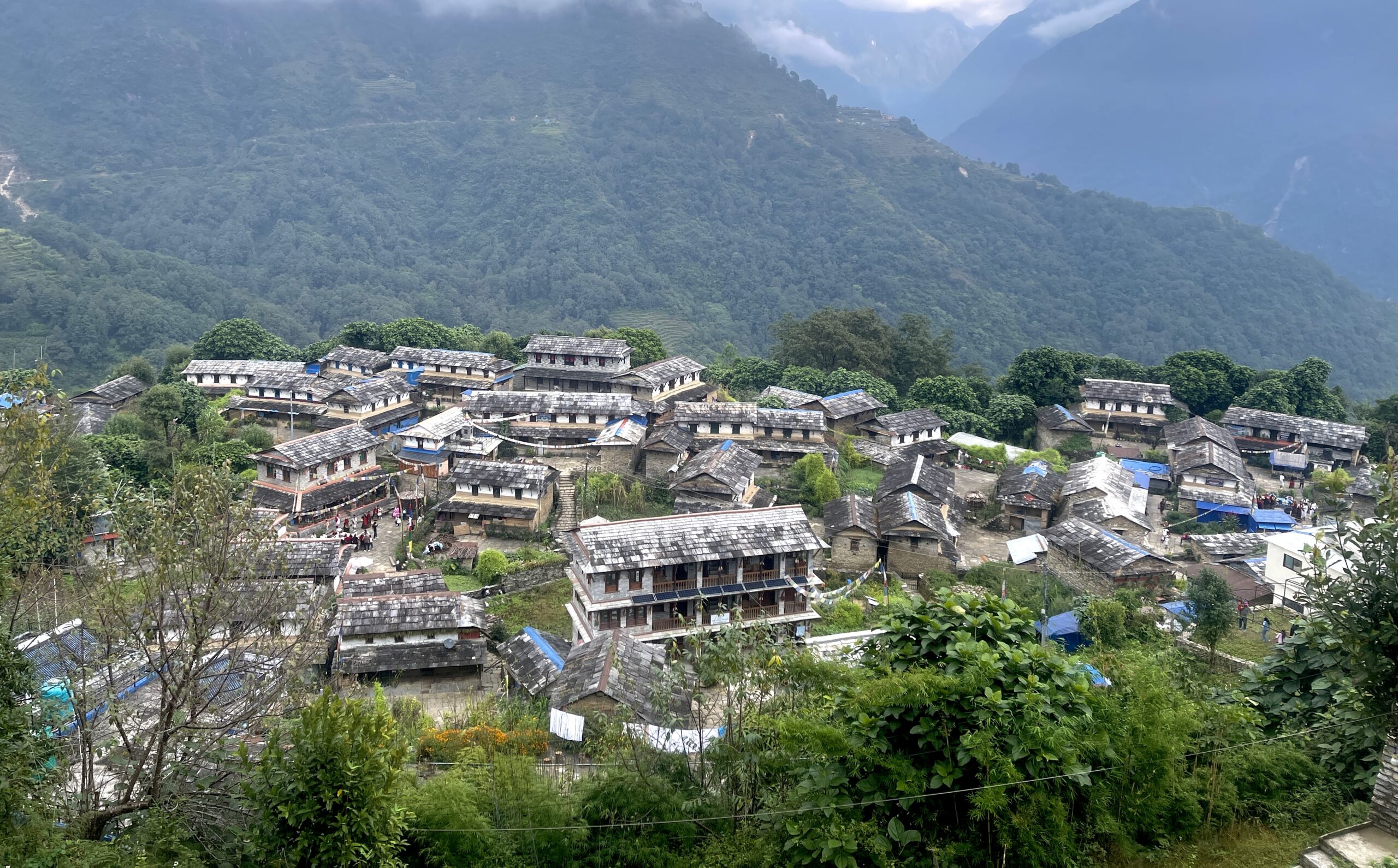
For Nepal, climate justice is not an abstract phrase in a UN document. It is about communities rebuilding after floods, glaciers retreating and a country confronting climate disasters it did little to create.
“Climate justice must not become a beautiful phrase confined to United Nations documents,” Shah said. “Our people should be able to build their future instead of constantly rebuilding their past. We deserve justice.”
Shah’s argument goes beyond Nepal’s suffering.
Countries that historically polluted the most, Shah said, must now accept greater responsibility for the consequences of a warming planet. But Nepal is not calling for a geopolitical blame game. Nor is it arguing that its neighbours or other countries should bear responsibility for every disaster that strikes its territory.
Its argument is more fundamental: climate change is a shared crisis, and the response must be shared too.
Shah said Nepal expects all parties to climate change to fulfill their responsibilities. He also warned against turning climate-related disasters into occasions for geopolitical accusation and recrimination.
Instead, he proposed turning the Himalayas into a shared laboratory for reducing climate risks. He called for a Himalayan Climate Resilience Mechanism, led by Nepal, India and China.
The Hindu Kush Himalaya is linked to the water, ecosystems, agriculture and livelihoods of roughly two billion people. It is a critical part of the planet’s ecological system. Its protection, therefore, cannot be treated as the responsibility of one country alone.
Shah proposed sharing satellite data and technical expertise, monitoring vulnerable glacial lakes, strengthening joint early-warning systems and coordinating cross-border assistance during disasters.
The idea is worth considering on its own terms: the Himalayas should not become a borderland of fragmented information and isolated national responses. They should become a testing ground for international cooperation.
For poor countries already bearing the consequences of climate change, Shah argued, loans and small, fragmented grants are not enough. They need substantial grant-based support. Existing global climate-finance mechanisms, he said, remain inadequate.
That is where the argument for climate justice becomes particularly difficult to separate from the realities on the ground.
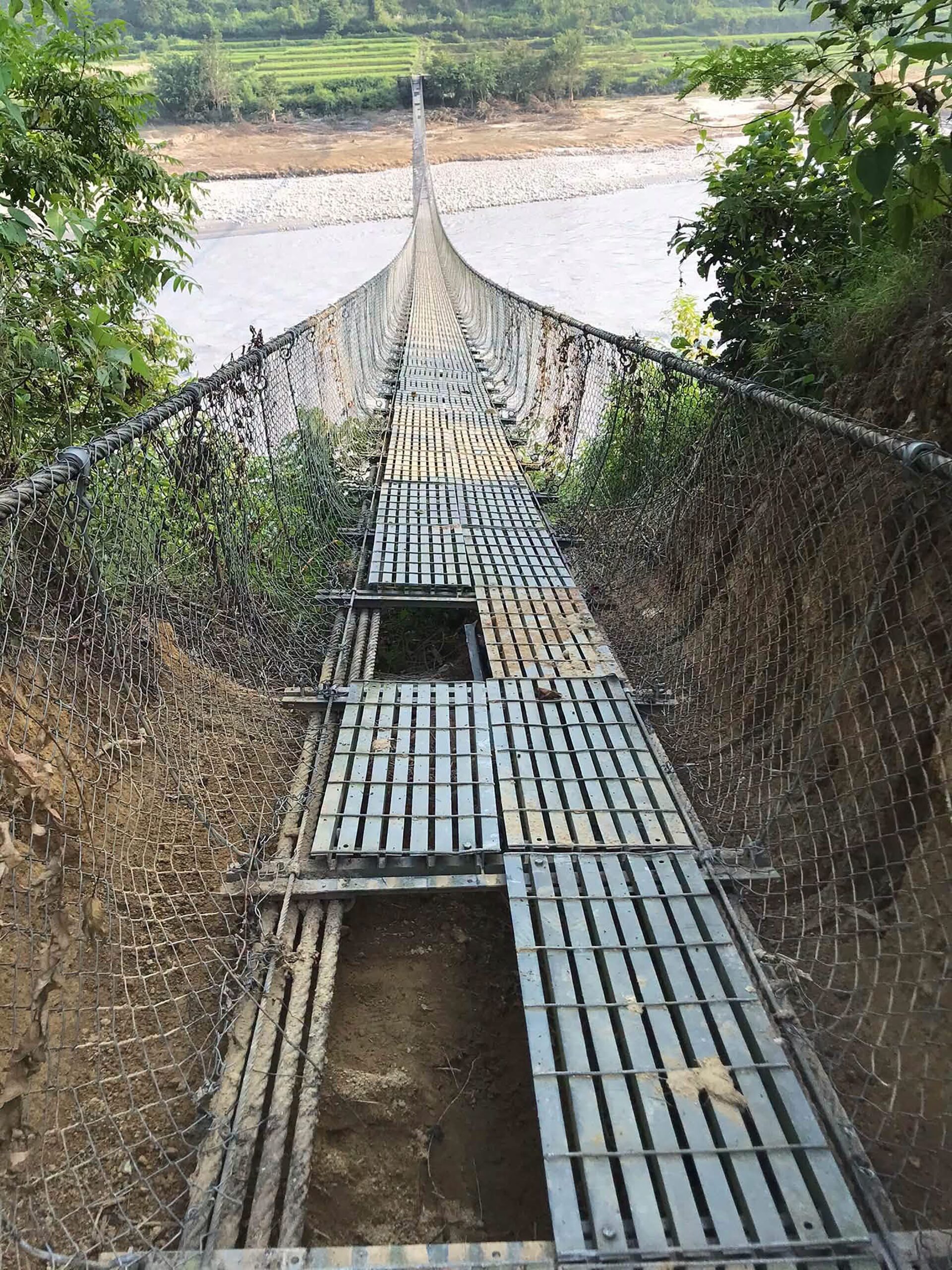
Nature has no walls. Disasters do not stop at fences. Glaciers do not check passports. Floods do not apply for visas. The recent Bhotekoshi disaster made that brutally clear.
The massive Bhotekoshi flood originating on the Chinese side swept through the mountainous region with such force that the political boundary between China and Nepal meant little to the disaster itself. Both sides suffered damage.
Nepal’s geography made the consequences particularly severe. The terrain on the Nepali side falls into deeper valleys, so the water rushed downhill and caused greater destruction.
That is not a political argument. It is geography. But it illustrates why climate change cannot be understood through national borders alone.
Nepal has made a negligible contribution to global carbon emissions, yet it is highly exposed to the consequences of a changing climate. Its northern and southern neighbours, meanwhile, account for a substantial share of global greenhouse-gas and carbon emissions.
Those figures are not merely numbers on an international chart. They describe a climate system whose consequences do not remain inside national borders.
China and India are not insulated from the risks unfolding around Nepal. They are part of the same interconnected regional system—and are themselves exposed to climate-related hazards.
Again, the Bhotekoshi flood provides the clearest illustration.
The disaster caused destruction on the Chinese side before entering Nepal. Once the floodwater reached Nepal’s steeper terrain, the downhill flow intensified the damage. The disaster also crossed another boundary: nationality.
Indian citizens were also among those exposed to the disaster’s wider consequences. Borders may divide countries, but they do not prevent people from sharing the same religious, natural and adventure-tourism routes.
At the time, Indian pilgrims were travelling towards Gosainkunda. Groups of Indian and Nepali travellers, including groups travelling under the leadership of Sadhguru, were also heading towards Mansarovar in China.
When the disaster struck, it did not distinguish between them. It did not ask who was Chinese, Indian or Nepali.
That is the nature of disaster. It recognises neither nationality nor political geography. Human suffering, likewise, is not confined to one side of a border.
This is why the climate crisis must be treated as a shared problem–and why the response must be based on shared action.
If floods and other disasters do not recognise borders, neither should efforts to prevent and mitigate them. Cooperation over data, early warnings, disaster response, water systems and climate finance is not charity. It is practical self-interest for countries sharing the same fragile ecological system.
Shah’s UN address also sought to challenge another part of the global climate conversation: the tendency to view countries such as Nepal only as victims.
Nepal is vulnerable, but it is not merely a victim.
Its vast Himalayan landscape and river systems play an important role in the global environmental system. The country’s ecological contribution extends well beyond its emissions profile.
That contribution should be recognised when the world discusses climate responsibility and climate finance.
For vulnerable countries, access to climate finance should not require years of paperwork before assistance reaches the communities facing the consequences.
Shah described this bureaucratic maze as an additional burden imposed on countries already paying the price of climate change.
The message was clear: countries that provide ecological services to the world should not have to spend years navigating administrative barriers simply to obtain support when climate disasters destroy homes, infrastructure, livelihoods and development gains.
There was a particular reason for Shah to make this case himself at the General Assembly.
Foreign Minister Shisir Khanal was initially scheduled to attend the gathering. But after the devastating Bhotekoshi flood on August 26 and the destruction it caused in river-basin districts including Rasuwa, Nuwakot and Dhading, Shah travelled to the UN himself.
He went not simply to describe Nepal’s suffering, but to put the consequences of the climate crisis before the international community and press Nepal’s demand for climate justice.
His address came two days after UN Secretary-General António Guterres spoke about the extraordinary damage Nepal is suffering from climate change.
Guterres recalled his visit to Nepal two years earlier, when he witnessed the rapid melting of the country’s glaciers. What happens in the Himalayas, he said, does not stop at Nepal’s borders. Its consequences extend far beyond them.
The Bhotekoshi disaster gave that warning a stark new dimension. On climate-related compensation, too, the message from the UN leadership echoed the argument Nepal has long made.
Guterres has argued that countries that have contributed most to climate change should bear responsibility for the damage associated with it.
Shah made a similar case.
For Nepal, he said, climate disasters are not merely humanitarian emergencies. They are development emergencies.
Every major flood, landslide or other climate-related disaster can destroy infrastructure, livelihoods and years of development gains. A poor country can be forced repeatedly to rebuild what it has only recently managed to construct.
That is why the question cannot simply be reduced to how much money is available after a disaster. Justice is not the same thing as compensation.
Nepal has been asking for climate justice on international platforms for years. Shah’s address gave that demand a sharper and more immediate context.
Nepal is not simply showing the world its suffering.
It is asking a more difficult question: why should a country that contributed so little to the climate crisis repeatedly bear such a heavy share of its consequences?
That is the question at the heart of Nepal’s climate diplomacy.
And it is why the country’s demand should not be dismissed as a “victim card”–a plea for sympathy based simply on suffering.
Nepal is asking for recognition of a wider principle: responsibility should have a relationship with contribution, and climate action should have a relationship with the scale of the crisis. The Himalayas are often called the roof of the world. Protecting that roof is not Nepal’s responsibility alone.
Rivers that begin in the mountains do not stop at Nepal’s borders. Neither do glaciers, floods or the effects of a warming planet.
Nepal is not asking the world merely to recognise its suffering. It is asking who bears greater responsibility and whether the global system can deliver justice to countries that contributed little to the crisis.
That is not a victim card. It is a demand for climate justice.





© 2026 All right reserved to arthanepal.com | Site By : Sobij